.svg)
What Is RIE Parenting?
.jpg)
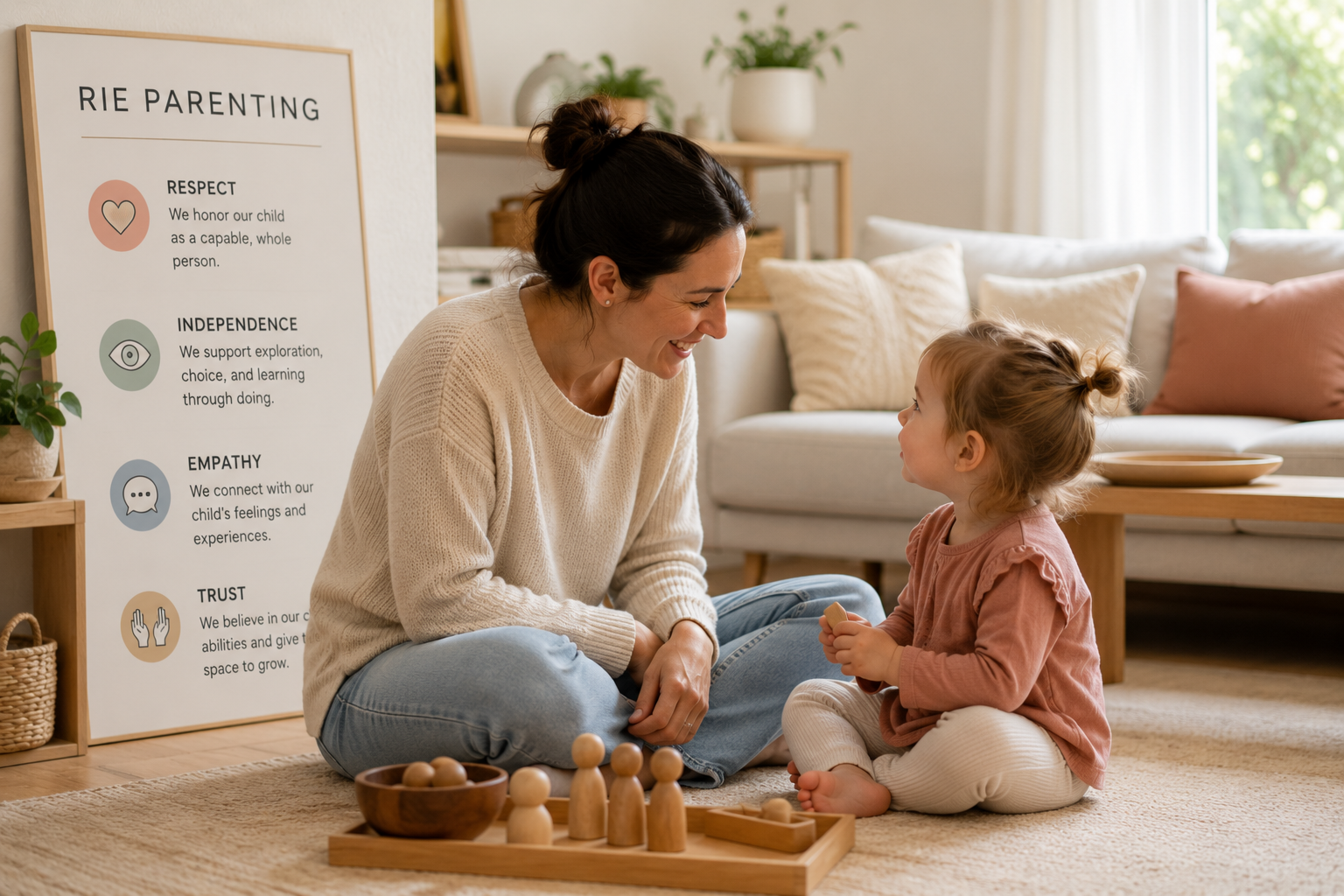
What Is RIE Parenting?
Many parents hear the term “RIE” for the first time and assume it refers to a specific type of school or curriculum. In reality, RIE is a philosophy about how adults interact with babies and young children.
RIE stands for Resources for Infant Educarers and was developed by infant specialist Magda Gerber. The philosophy is built on a simple but powerful belief: babies are capable individuals who deserve respect, clear communication, and opportunities to develop at their own pace.
Rather than trying to constantly entertain or stimulate infants, RIE encourages caregivers to slow down, observe, and support a child’s natural development.
Respectful Communication With Babies
One of the most recognizable aspects of RIE parenting is the way caregivers communicate with infants.
Instead of moving quickly through caregiving routines, adults speak directly to the baby and explain what is happening.
For example:
- “I’m going to pick you up now so we can change your diaper.”
- “I’m going to put your shirt on.”
This may sound simple, but the goal is to include the child in the interaction rather than treating the routine as something done to them.
Many parents find that this style of communication builds:
- Trust
- Emotional security
over time.
Allowing Babies to Explore
Another core idea in RIE caregiving is allowing babies to explore their environment naturally.
Rather than placing infants in devices or constantly offering stimulation, caregivers create a safe space where babies can move freely and discover their abilities.
For example, a baby may spend time:
- Rolling
- Reaching
- Exploring simple toys placed nearby
These experiences allow infants to build:
- Coordination
- Confidence
through their own movement.
Caregivers observe and support the process rather than interrupting it.
Emotional Awareness
RIE also places a strong emphasis on acknowledging a child’s feelings.
When babies cry or become frustrated, caregivers respond calmly and respectfully instead of trying to immediately distract or silence the emotion.
For example:
- “You didn’t like that.”
- “You’re feeling upset.”
This approach helps children begin to:
- Understand their emotions
- Regulate their feelings
over time.
Many parents appreciate the emotional awareness built into the RIE philosophy.
RIE and Other Childcare Philosophies
Like many approaches to early childhood development, RIE is rarely practiced in complete isolation.
Many caregivers combine elements of RIE with other philosophies depending on the child’s needs and the family’s values.
A nanny might use:
- RIE principles for infants
- Montessori ideas for independence
- Waldorf or Reggio Emilia for creativity and play
If you want a broader look at how these philosophies compare, you can explore:
Choosing the Best Nanny for Your Child: Montessori, RIE, Reggio Emilia, Waldorf & More
Finding the Right Fit for Your Family
When families begin searching for a nanny, understanding caregiving philosophy can make the process much easier.
Some families value:
- Independence and practical life skills
- Emotional awareness
- Creativity and exploration
- Time spent outdoors
There is no single correct approach.
The most successful childcare relationships come from:
- Shared values between families and caregivers
- A thoughtful understanding of how children grow and develop
Learning about philosophies like RIE can help families choose caregivers who support their parenting style while remaining responsive to the unique needs of each child.
View similar resources

Babysitter or Nanny in Cincinnati? Why Busy Families Need More Than Coverage

Finding a Nanny in Austin When You're New to the City